
Weekly Weight Loss
Injections Guide
A simple, easy-to-follow guide to help you understand proper injection techniques, safe handling, and best practices for weekly weight loss injections.
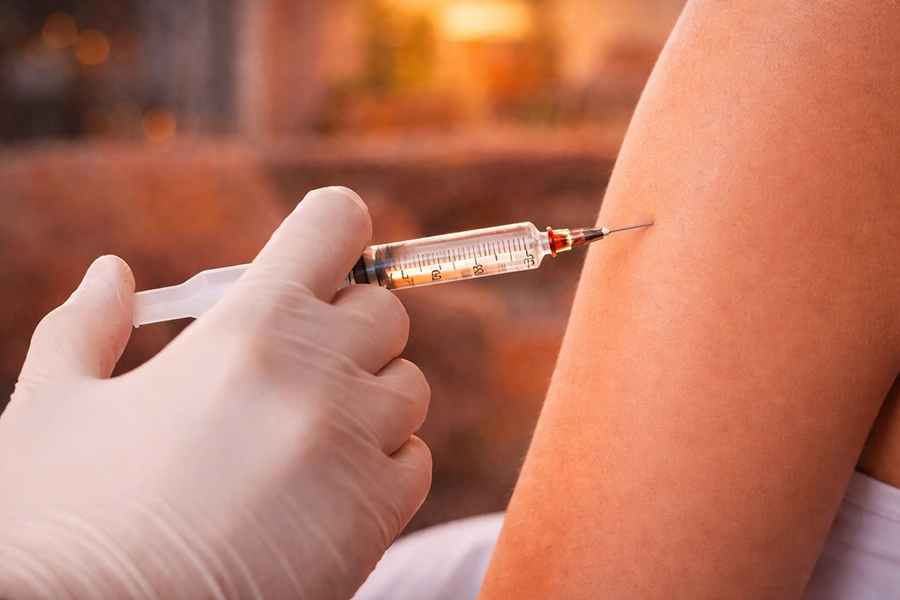
Where to Inject
Weekly weight loss injections are typically administered subcutaneously (under the skin). Common injection sites include:
Inject at least 2 inches away from the belly button to avoid discomfort.
Use the outer upper thigh area for easy self-administration.
Inject in the back of the upper arm, usually with assistance from another person.
How to Inject Safely
Follow these general steps when administering your injection. Always follow your provider's specific instructions.
Wash your hands and gently clean the selected injection site with an alcohol wipe. Allow the skin to dry completely before proceeding.
Hold the syringe securely and gently pinch the skin to create a stable surface for injection.
Insert the needle smoothly and steadily, following your provider's specific instructions for angle and depth.
Press the plunger slowly and steadily to deliver the medication. Remove the needle at the same angle it was inserted.
Helpful Tips
- Store your medication exactly as directed by your provider or pharmacist
- Never reuse needles or syringes — use a new one for every injection
- Follow your provider's dosing schedule carefully and do not skip or double doses
- Keep injection supplies clean and organized in a designated area
- Contact your healthcare provider if you have questions, concerns, or experience unexpected symptoms
How to Understand Your Syringe Measurements
Syringes are marked in units, which correspond to specific milliliter (ml) amounts. Use this reference to follow your provider's instructions safely.
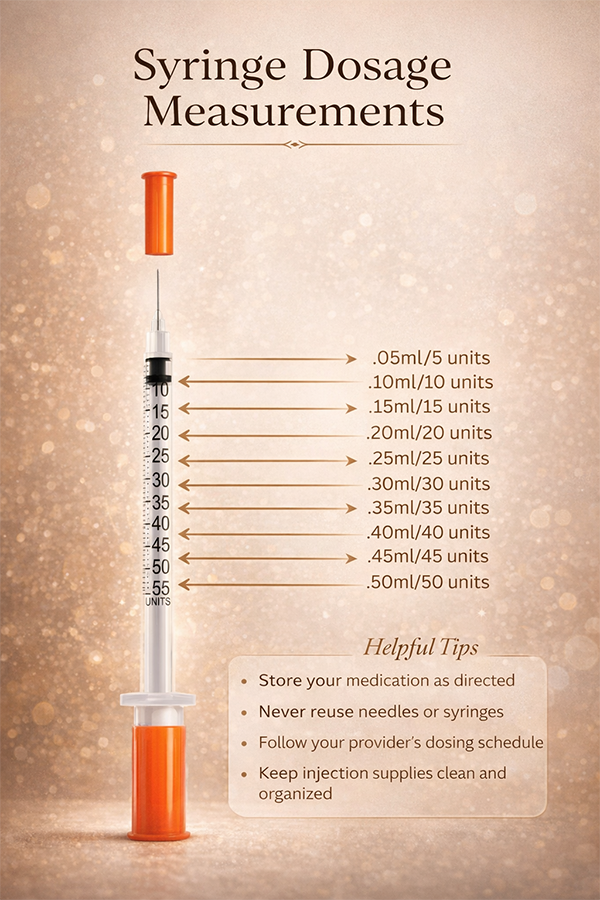
| Units | Milliliters (ml) |
|---|---|
| 5 units | 0.05 ml |
| 10 units | 0.10 ml |
| 15 units | 0.15 ml |
| 20 units | 0.20 ml |
| 25 units | 0.25 ml |
| 30 units | 0.30 ml |
| 50 units | 0.50 ml |
- Store your medication exactly as directed
- Never reuse needles or syringes
- Follow your provider's dosing schedule carefully
- Keep injection supplies clean and organized
- Contact your provider if you experience unexpected symptoms
Always follow the exact amount prescribed by your healthcare provider.
Educational Use Only — This content is intended for educational purposes only and does not replace professional medical advice, diagnosis, or treatment. Always follow the guidance and instructions provided by your licensed healthcare provider.
Ready to start your weight loss program?
Medically guided. Provider-approved. 100% from home.
Shop Programs